October 12, 2026 5:23AM
Food Delivery in Malaysia 2026: Who Is Driving Growth, and Which Platform Leads?
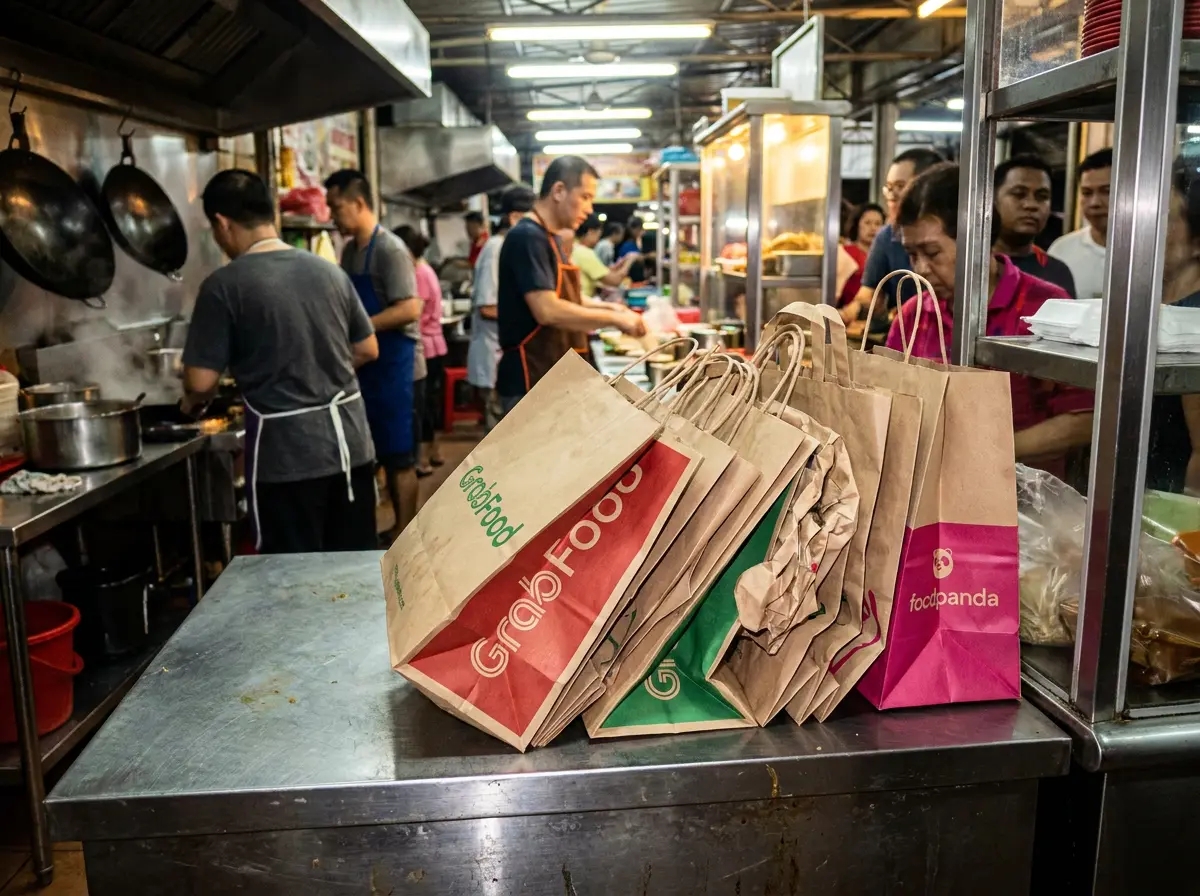
Food delivery has become an established part of Malaysians' dining habits, with 93% of surveyed respondents having used food delivery services in the past three months. Despite this widespread adoption, average ordering frequency remains relatively modest, suggesting that food delivery is a familiar but not necessarily everyday habit for many consumers. At the same time, a substantial proportion of Malaysians report ordering more frequently than a year ago, highlighting how food delivery habits continue to evolve.
The Vodus Dining Study Malaysia 2026 Market Report examines how Malaysians use food delivery services, which consumer groups are increasing their orders, and how platforms such as GrabFood, Foodpanda, and ShopeeFood compare. The findings reveal differences in ordering frequency, platform preferences, and consumer motivations, offering a closer look at the trends shaping Malaysia's food delivery landscape.
Key Insights
- 93% of respondents used food delivery in the past three months, averaging 1.4 orders per week, while 46% report ordering more frequently than a year ago.
- Younger Malaysians are increasing their usage, with 57% of those aged 18–34 reporting more frequent orders, alongside higher-income households.
- GrabFood leads at 43%, ahead of Foodpanda (26%) and ShopeeFood (15%), with platform preferences varying across consumer segments.
- Convenience outweighs discounts, with time savings (52%) and avoiding cooking or going out (45%) leading promotions (34%).
Research Methodology
Vodus Research conducted a nationwide online survey of 1,964 Malaysian adults aged 18 and above from 3 to 24 July 2026. The study covered Peninsular and East Malaysia, with respondents stratified to mirror the Malaysian population census.
Data was collected using Vodus' proprietary OMTOS (One-question-at-a-time) online survey methodology through media placements across the Vodus Media Network, including Astro, Media Prima, and Star Media. The methodology delivers short survey questions during online content consumption to reduce respondent fatigue.
Responses underwent quality checks to identify duplicates, unusually fast completions, and inconsistent response patterns. As the study used a modular survey approach, the number of respondents varies by question. Findings reflect self-reported consumer behaviour and perceptions.
Is Food Delivery Still Growing in Malaysia in 2026?
Food delivery has achieved widespread adoption in Malaysia, with 93% of respondents reporting that they had used food delivery services in the past three months. However, average usage stands at approximately 1.4 orders per week, indicating that while food delivery is widely used, frequent ordering is far from universal. The findings suggest that food delivery has become an established part of Malaysian dining habits, although the extent to which consumers rely on these services varies considerably
 .
.
There are also signs of increasing usage. Nearly half of respondents (46%) report ordering food delivery more frequently than a year ago, while 31% say their ordering frequency has remained unchanged and 23% report ordering less often. This indicates that more Malaysians perceive an increase rather than a decline in their food delivery usage, although these self-reported changes do not directly measure growth in total market transactions or revenue.
Together, these findings reveal an important characteristic of Malaysia's food delivery landscape: adoption is already widespread, but ordering frequency remains relatively modest, with usage continuing to evolve across different consumer groups.
Who Is Driving Food Delivery Growth in Malaysia?
Although food delivery is widely used across Malaysia, changes in ordering frequency are not uniform across demographic groups. Younger Malaysians and higher-income households stand out as consumer segments reporting stronger increases in usage, while older and lower-income consumers generally demonstrate more moderate ordering patterns. These differences suggest that increases in food delivery frequency are concentrated more heavily among certain consumer groups rather than occurring evenly across the population.
Younger Malaysians Are Ordering Food Delivery More Frequently
Among respondents aged 18–34, 57% report ordering food delivery more frequently than a year ago, compared with 46% of respondents overall. This highlights stronger growth in self-reported ordering frequency among younger Malaysians, suggesting that food delivery is becoming a more regular part of their dining habits. Younger consumers also tend to report higher ordering frequency, reinforcing their importance within Malaysia's evolving food delivery landscape.
However, ordering behaviour varies across age groups. While younger consumers show stronger increases in usage, older Malaysians generally report lower ordering frequency, indicating that food delivery plays different roles in the daily routines of different generations.
Higher-Income Households Also Show Stronger Growth
Household income is another factor associated with differences in food delivery behaviour. Higher-income households report stronger increases in ordering frequency, while lower-income consumers generally demonstrate lighter usage. The findings also indicate that ordering frequency and preferred delivery platforms vary across income segments, suggesting that consumer engagement with food delivery is influenced by more than age alone.
These differences highlight the diversity of Malaysia's food delivery users. Although adoption is widespread, the frequency of ordering and changes in usage differ across age, household income, and other demographic characteristics.
GrabFood vs Foodpanda vs ShopeeFood: Which Food Delivery Platform Leads in Malaysia?
GrabFood holds a clear lead in Malaysia's food delivery landscape, with 43% of recent food delivery users identifying it as their most-used platform. Foodpanda follows at 26%, while ShopeeFood and direct restaurant ordering each account for approximately 15%. These figures reflect consumers' most-used ordering channels rather than transaction or revenue market share.
While GrabFood leads overall, consumer preferences vary across demographic groups, suggesting that platform usage is not uniform across Malaysia. Differences by age, region, and household income reveal a more varied competitive landscape than the overall platform rankings alone might suggest.
GrabFood Leads Overall Platform Preference
GrabFood is the most-used platform among 43% of recent food delivery users, making it the clear leader in overall consumer preference. Its position is particularly strong among certain age, regional, and household income segments, although the extent of its lead differs across consumer groups. This suggests that GrabFood's overall popularity is supported by a diverse user base, with varying levels of preference across different parts of the Malaysian population.
Foodpanda Remains the Second Most-Used Platform
Foodpanda ranks second, with 26% of recent food delivery users identifying it as their most-used platform. Despite GrabFood's overall lead, Foodpanda maintains a substantial presence in Malaysia's food delivery landscape, with stronger preferences among selected demographic and regional segments. The findings indicate that the competitive relationship between GrabFood and Foodpanda differs depending on the consumer group being examined.
ShopeeFood and Direct Restaurant Ordering Remain Relevant
ShopeeFood and direct restaurant ordering each account for approximately 15% of consumers' most-used ordering channels. Although their overall shares are smaller than those of GrabFood and Foodpanda, both remain relevant options for Malaysian consumers, particularly within certain demographic and regional segments.
The findings show that Malaysia's food delivery landscape is led by GrabFood but remains diverse, with different ordering channels attracting consumers with varying characteristics and usage patterns. However, the study does not directly establish why consumers prefer one platform over another, such as differences in delivery fees, promotions, restaurant selection, or service experience.
Which Food Delivery Platform Has the Most Frequent Users?
Platform preference provides one perspective on Malaysia's food delivery landscape, but ordering frequency reveals another important difference between consumers. Those who primarily use GrabFood report higher overall food delivery ordering frequency than respondents who primarily use Foodpanda, ShopeeFood, or direct restaurant ordering. This suggests that GrabFood's leading position extends beyond the number of consumers identifying it as their most-used platform, as its primary users also tend to order food delivery more frequently.
Ordering frequency varies across the platforms, with direct restaurant ordering associated with the lowest overall food delivery frequency among the channels examined. These differences highlight why platform preference and ordering intensity should be considered separately. A platform may attract a substantial proportion of consumers without necessarily having the most frequent users, while another may account for a smaller share of preferred platforms but attract consumers who order more regularly.
The findings provide a more detailed picture of how Malaysians engage with different food delivery channels beyond overall platform rankings.
Why Do Malaysians Order Food Delivery: Convenience or Discounts?
Convenience is the strongest motivation behind food delivery usage in Malaysia, outweighing promotions and discounts. Among recent food delivery users, 52% cite saving time as a reason for ordering delivery, followed by being too tired to cook or go out (45%), finding delivery more convenient than going out (37%), and being attracted by promotions and discounts (34%). Respondents could select up to three reasons.
These findings suggest that food delivery primarily fulfils a practical need, allowing consumers to obtain meals without spending additional time preparing food or travelling to restaurants. Although promotions remain an important consideration, reducing time and effort appears to be the more fundamental reason Malaysians use food delivery services.

Time Savings Are the Leading Motivation
Saving time is the most frequently cited motivation, selected by 52% of food delivery users. Another 45% report ordering because they are too tired to cook or go out, while 37% find food delivery more convenient than dining out. Together, these findings indicate that the appeal of food delivery is closely linked to the convenience it provides in consumers' everyday routines.
The prominence of these motivations also suggests that food delivery is not solely associated with occasional indulgence or promotional purchases. For many Malaysians, it serves as a practical alternative when preparing meals or dining out requires additional time and effort.
Promotions and Discounts Remain Important but Secondary
Promotions and discounts are cited by 34% of food delivery users, making them a notable motivation for ordering. However, they rank behind time savings, fatigue, and general convenience, indicating that price-related incentives are not the leading reason consumers use delivery services.
This distinction is important in understanding Malaysian food delivery habits. While promotional offers contribute to the appeal of ordering online, the findings suggest that convenience remains the category's defining benefit, with discounts playing a supporting role in consumers' ordering decisions.
Ordering Motivations Vary Across Consumer Segments
Although convenience leads overall, the reasons Malaysians order food delivery differ across demographic groups. Factors such as time savings, promotions, convenience, and access to food choices vary in importance depending on consumers' age, region, and household income.
These differences suggest that food delivery fulfils a range of needs across Malaysia's population. While some consumers primarily value the time and effort saved, others place greater importance on promotional offers or the convenience of accessing meals without leaving home. The findings reinforce that consumer motivations are not identical, even within a category that has achieved widespread adoption.
What Do the Findings Reveal About Malaysia's Food Delivery Landscape?
Malaysia's food delivery landscape is characterised by widespread adoption, increasing usage among certain consumer groups, and clear differences in platform preference and ordering behaviour. Although 93% of respondents have used food delivery recently, average ordering frequency remains relatively modest, highlighting the distinction between having access to food delivery services and relying on them regularly.
Younger Malaysians and higher-income households stand out for their stronger increases in ordering frequency, while differences across other demographic groups reveal that food delivery habits continue to evolve unevenly. GrabFood leads as the most-used platform and attracts consumers who order more frequently, although Foodpanda, ShopeeFood, and direct restaurant ordering remain relevant among different consumer segments.
Convenience also emerges as the strongest motivation for ordering food delivery, with time savings and reduced effort taking precedence over promotions and discounts. Together, these findings show that Malaysia's food delivery landscape is shaped by a combination of consumer demographics, ordering frequency, platform preferences, and practical everyday needs.
Explore the Full Vodus Dining Study Malaysia 2026 Market Report
This article presents selected findings from the Food Delivery Usage & Platform Behaviour section of the Vodus Dining Study Malaysia 2026 Market Report. The full report provides deeper consumer insights across six key research areas:
- Overall F&B Consumption: Dining habits, consumption frequency, dining occasions, and key factors influencing food choices.
- Dining Formats & Outlet Choice: Restaurant and outlet preferences, dining frequency, and preferences for chain versus independent establishments.
- Food Delivery Usage & Platform Behaviour: Ordering frequency, platform preferences, usage motivations, and changes in food delivery habits.
- Cuisine, Discovery & Food Trends: Cuisine preferences, food discovery channels, and factors influencing consumers to try new food experiences.
- Beverage Landscape: Coffee and tea consumption, beverage preferences, purchase motivations, and spending behaviour.
- Health, Halal & Dietary Choices: Health-conscious eating habits, dietary preferences, Halal considerations, and their influence on food choices.
The report also includes detailed demographic comparisons across age, gender, ethnicity, region, and Monthly Household Income, providing a more comprehensive understanding of Malaysia's evolving F&B consumers.
The Vodus Dining Study Malaysia 2026 Market Report provides valuable consumer insights for restaurant operators, F&B brands, food delivery platforms, and investors seeking to better understand Malaysia's evolving dining habits and market trends.
Purchase the full Vodus Dining Study Malaysia 2026 Market Report to access comprehensive consumer insights, detailed demographic comparisons, and deeper analysis of Malaysia's food delivery and F&B landscape.