August 07, 2026 5:57AM
Cash or E-Wallet? How Malaysians Prefer to Pay
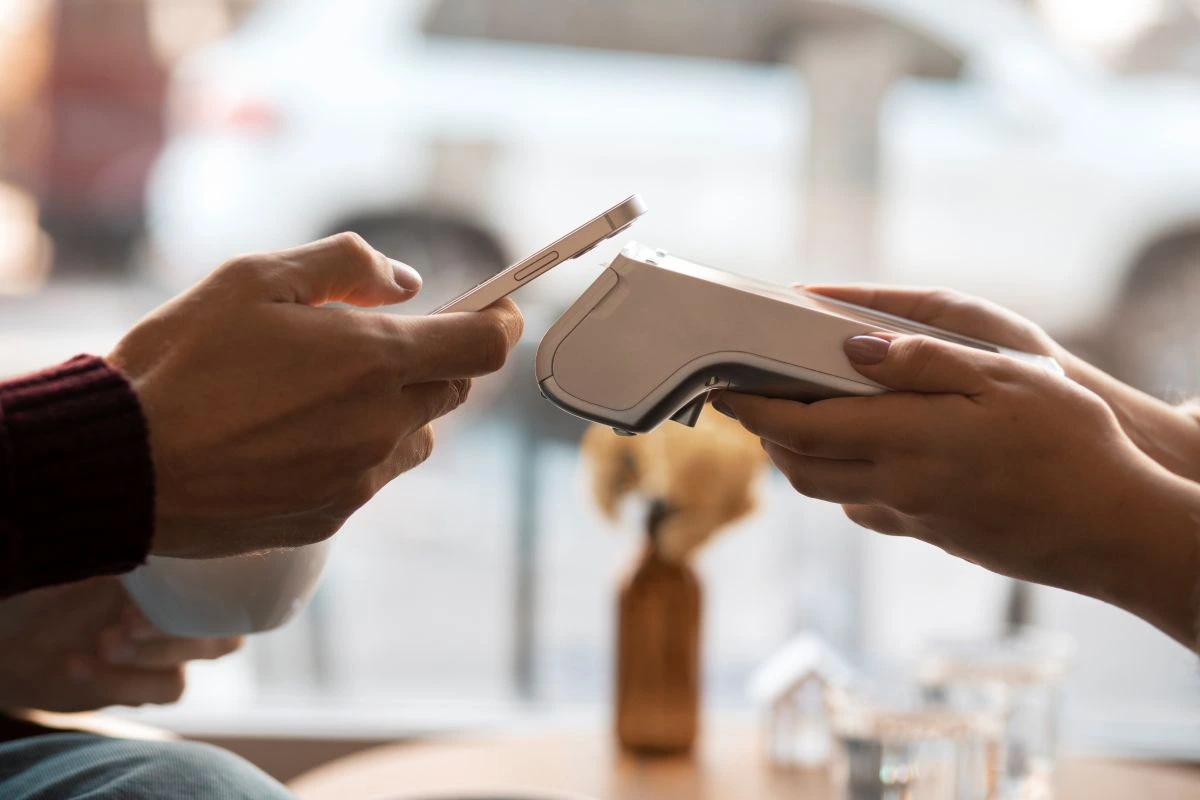
The way Malaysians pay has become increasingly flexible. A single consumer may use online banking for an e-commerce purchase, scan an e-wallet QR code at lunch, pay by debit card at a supermarket and still choose cash for another everyday transaction.
Our Consumer Consumption Study Malaysia 2026 shows that this flexibility is now a defining feature of the payment landscape. Malaysians have not simply moved from cash to one dominant digital alternative. Instead, different payment methods coexist, with preferences changing according to whether consumers are shopping online or in a physical store.
E-wallets occupy an increasingly important position within this mix because they offer more than a way to complete a transaction. Convenience, cashback, rewards and merchant acceptance can influence both where people shop and how they perceive their spending. At the same time, cash continues to have a substantial role in physical retail, particularly among certain consumer groups.
The result is a Malaysian payment market shaped by choice rather than complete replacement. Digital payments are firmly established, but consumers continue to move between cash, cards, banking and e-wallets according to the situation.
Key Insights
• Cash still leads in physical stores: 30% use cash most often in store, while online payments are spread more evenly across e-wallets, banking, QR and cards.
• E-wallets are now part of everyday payment behaviour: 71% consider e-wallets the most convenient way to pay, reinforcing their established role in Malaysia’s payment landscape.
• Touch ’n Go clearly leads the e-wallet market: 61% name TNG eWallet as their preferred e-wallet, well ahead of other providers.
• Payment choice can influence where Malaysians shop: 67% are more likely to shop at stores that accept e-wallets, showing that payment options now matter beyond the checkout itself.
Research Methodology
This article is based on findings from the Consumer Consumption Study Malaysia 2026 conducted by Vodus Research. The study is a quantitative market research survey examining how Malaysians shop, spend and make purchase decisions, including the channels they use, their payment preferences, e-commerce behaviour and the factors shaping consumer choice.
The study methodology reports a nationwide sample of 1,232 Malaysian adults across Peninsular and East Malaysia, stratified to reflect the Malaysian population. Fieldwork was conducted from 17 to 30 March 2026.
Insights were gathered through Vodus Research’s proprietary OMTOS online survey method, which reaches Malaysian consumers through digital media partner placements, including Astro and Media Prima, enabling broad and scalable nationwide coverage.
This provides a detailed view of how Malaysia’s payment landscape is evolving, including the continued role of cash, growing use of e-wallets and digital banking, differences between online and in-store payments, and the ways payment convenience and rewards are beginning to influence shopping behaviour.
Malaysians Use Different Payment Methods for Different Situations
The most striking characteristic of Malaysian payment behaviour is the absence of a single method that dominates everywhere.
When shopping online, e-wallets and online banking or QR payments jointly lead at 23% each. Cash or cash on delivery remains relevant at 19%, while debit cards account for 18%. Credit cards represent 10%, with Buy Now Pay Later at 6%.
The pattern changes in physical stores. Cash leads at 30%, followed by e-wallets at 24% and debit cards at 19%. Online banking or QR accounts for 15%, while credit cards and Buy Now Pay Later are used less often at 9% and 3%.

These differences suggest that Malaysians increasingly view payment methods as tools for different circumstances rather than mutually exclusive choices. The same person may be highly comfortable with digital payments while still finding cash or cards more practical for certain transactions.
This is why the question of which payment method Malaysians prefer cannot be answered with one national winner. The shopping environment matters, and consumers appear comfortable switching between methods when another option feels faster, easier or more familiar.
Cash Remains Important in Physical Stores
Malaysia’s growing use of digital payments has not removed cash from everyday retail.
Cash remains the most used in-store payment method at 30%, placing it ahead of e-wallets at 24%. Its continued importance demonstrates that the move towards cashless payments is occurring alongside established payment habits rather than replacing them overnight.
The overall figure also hides considerable differences between consumer groups. In-store cash usage reaches 51% among East Coast Malaysians and 39% among consumers aged 45+. It rises further to 43% among those with monthly personal income below RM1,500.
These differences show why Malaysia’s cashless transition cannot be understood only through national averages. Digital adoption is progressing at different speeds across regions, age groups and income levels.
Cash can also provide a clear and tangible sense of expenditure because the amount leaving the wallet is immediately visible. The study does not directly measure why individual consumers continue to choose cash, so motivations should not be assumed. What the findings establish is that physical retailers still serve a substantial group of shoppers for whom cash remains part of normal payment behaviour.
Online Payments Are Much More Fragmented
Online shopping produces a very different payment environment because consumers encounter several digital methods at the same point of checkout.
E-wallets and online banking or QR each account for 23% of the payment methods used most frequently online. Cash or cash on delivery follows at 19%, debit cards at 18%, credit cards at 10% and Buy Now Pay Later at 6%.
This relatively even distribution suggests that Malaysian consumers have developed several ways of completing online transactions rather than consolidating around one dominant digital method.
Demographic differences can also be seen within those choices. E-wallet usage for online shopping rises to 31% among Malaysians aged 18 to 24, while online banking or QR reaches 30% among those aged 25 to 44. Debit card usage online also rises to 26% among consumers aged 18 to 24.
The pattern illustrates how digital payment behaviour itself is becoming segmented. Being comfortable with online shopping does not automatically mean preferring the same way to pay.
For e-commerce businesses, the checkout experience is therefore part of the wider customer journey. Consumers may have already selected a product and decided to purchase, but payment can still introduce friction if the methods available do not match their established habits.
E-Wallets Have Become Part of Everyday Payment Behaviour
E-wallet adoption is being supported by a combination of convenience and perceived value.
A total of 71% agree that e-wallets are the most convenient payment method, while 68% prefer them because of rewards, cashback or points.
The strength of convenience is particularly visible among some consumer groups. Agreement rises to 82% among consumers in the Central region, 78% in the Southern region and 79% among those aged 25 to 34.
Rewards show a similar pattern, with 81% of consumers aged 25 to 34 agreeing that cashback, points or other benefits encourage their preference for e-wallets.
This combination helps explain why e-wallets have become more than a technological alternative to cash. Convenience reduces friction at checkout, while rewards create an additional benefit attached to a transaction consumers were already going to make.
The more often a consumer experiences both benefits together, the easier it becomes for the payment method to turn into a routine.
Touch ’n Go Has Established a Clear Lead
Malaysia’s broader payment market may be fragmented, but preference within the e-wallet category is much more concentrated.
Touch ’n Go is preferred by 61% of Malaysians surveyed on e-wallet choice. Bank apps rank second at 15%, followed by ShopeePay at 9%. Boost accounts for 2%, while GrabPay, Wise and FavePay each represent 1%.

The strength of Touch ’n Go becomes even clearer when compared over time. Preference stood at 62% in 2024 and remains almost unchanged at 61% in 2026.
Rather than consumers repeatedly moving between competing e-wallets, this stability suggests that a significant share of the market has settled into an established payment habit.
Touch ’n Go also performs particularly strongly among several consumer groups. Preference reaches 73% among Malaysians aged 25 to 44, 76% among Chinese consumers and 68% among those in the Central region.
The important point is not simply that Touch ’n Go leads. It is that its lead has remained highly resilient even as Malaysia’s broader digital payment ecosystem continues to develop.
Other Digital Payment Options Still Have Distinct Audiences
A dominant e-wallet does not mean other digital payment services have become irrelevant.
Bank apps account for 15% of preferred e-wallet or digital wallet choices, with preference rising to 22% among consumers in the East Coast and 22% among those aged 18 to 24. ShopeePay accounts for 9% overall but reaches 18% among Southern consumers and Malaysians aged 55+.
These differences reinforce the idea that payment behaviour is segmented by audience as well as transaction type.
Consumers may value different payment ecosystems for different reasons. A bank app can sit naturally alongside services already used to check balances or transfer money, while an e-commerce linked wallet can integrate payments with shopping and platform rewards.
The study does not directly measure the reasons behind each brand preference, so these motivations should not be treated as established findings. The demographic variations do, however, demonstrate why a national market share figure alone does not provide the complete picture.
The full Consumer Consumption Study Malaysia 2026 contains the broader demographic profiles behind individual e-wallet preferences.
Rewards Have Become Part of the Payment Proposition
Cashback, points and other incentives have helped make the payment itself part of the value consumers receive from shopping.
Around 7 in 10 Malaysians say rewards, cashback or points contribute to their preference for e-wallets. This is only slightly behind convenience as the strongest e-wallet attitude measured in the study.
The implication for consumer behaviour is significant. Traditionally, the value of a purchase was concentrated primarily in the product or service. Digital payments can add a second layer of perceived value through the method used to complete the transaction.
A consumer deciding between two payment options may therefore consider not only which is easiest, but which provides something back.
This can make payment part of the promotional environment surrounding a purchase. Cashback, rewards and points can support repeat use because the consumer receives an immediate or future benefit without necessarily changing what they intended to buy.
However, widespread rewards can also raise expectations. Once consumers become accustomed to receiving additional value for paying digitally, incentives may move from being a differentiator to becoming part of the expected experience.
E-Wallet Acceptance Can Influence Where Malaysians Shop
Payment methods are beginning to affect decisions before checkout.
Our study finds that 67% are more likely to shop at stores that accept e-wallets. This means payment acceptance can influence merchant consideration rather than mattering only after the consumer has decided where to buy.
The effect is stronger among some consumer groups. Agreement rises to 79% among Malaysians aged 25 to 34, 78% among Central region consumers and 76% among Chinese consumers.
This changes the role payment infrastructure plays in retail.
When consumers know their preferred e-wallet will be accepted, the transaction becomes more predictable. They may also expect access to rewards, cashback or other features associated with that payment method.
A merchant’s payment options can therefore become part of the overall convenience proposition alongside location, product availability, delivery and checkout speed.
The question of whether e-wallets affect where Malaysians shop is increasingly answered by the data itself: for a substantial majority, acceptance has become relevant to store choice.
Paying Digitally Can Also Affect Perceptions of Spending
The convenience that makes e-wallets attractive may also change how consumers experience expenditure.
A total of 57% say they spend more money than intended when using an e-wallet compared with cash. Among Malaysians aged 18 to 34, this rises to 70%.
This finding reflects consumers’ perceptions of their own behaviour. The study does not establish that e-wallet use directly causes people to spend more.
Nevertheless, it highlights how payment experience and spending behaviour can become connected. Cash creates a visible exchange, while digital payment reduces much of the physical effort involved in completing a purchase. Rewards can add another layer by making expenditure feel partly offset through cashback or points.
For consumers, the benefit is speed and convenience. The same frictionless experience, however, can make individual transactions feel easier to complete.
Payment innovation therefore influences more than the mechanics of checkout. It may also affect how consumers perceive and manage their spending.
Detailed analysis of which groups are most likely to report this behaviour is available in the full report.
Debit Cards Remain Relevant Across Both Shopping Environments
Debit cards occupy a relatively stable position whether Malaysians are shopping online or in physical stores.
They account for 18% of commonly used online payment methods and 19% in-store, making them one of the few methods whose usage changes very little between the two environments.
Their continued role demonstrates that the growth of e-wallets has expanded payment choice rather than eliminating established digital methods.
In-store debit card usage also varies by consumer profile, reaching 24% among Malay consumers and 24% among those with monthly personal income above RM5,000.
For many consumers, debit cards provide a familiar connection to existing bank accounts while still offering the convenience of cashless payment.
The Malaysian payment ecosystem is therefore not moving through a simple progression in which one technology replaces the previous one. Multiple payment methods continue to remain relevant because they fit different habits and transaction contexts.
Credit Cards Serve a Smaller but Distinct Segment
Credit cards represent a smaller share of payment usage than debit cards or e-wallets, accounting for 10% online and 9% in stores.
Despite their smaller overall share, usage is stronger among certain consumer groups. Online credit card usage reaches 29% among Chinese Malaysians and 21% among those aged 45 to 54, while in-store usage reaches 25% among Chinese consumers.
This illustrates why overall penetration can sometimes hide commercially relevant segments.
A payment method does not necessarily need to dominate the entire population to matter. Some options may be particularly important among consumers with different purchasing power, financial habits or transaction requirements.
Those detailed relationships between payment preference and consumer profile are where the full study provides greater depth beyond the national averages.
Buy Now Pay Later Remains a Supplementary Payment Method
Buy Now Pay Later has attracted considerable attention as a way to spread payments across instalments, but it remains a relatively small part of the overall payment mix in our study.
BNPL accounts for 6% of payment methods used most often online and 3% in physical stores.
Its stronger presence online is consistent with its integration into many digital checkout journeys, but usage remains well below e-wallets, online banking or QR, cards and cash or cash on delivery.
This suggests that BNPL currently serves particular purchase occasions rather than functioning as an everyday default for most Malaysian shoppers.
The overall percentage does not show which consumers or categories are most relevant to BNPL, and those more granular questions require segment and cross analysis beyond what is presented publicly in this article.
Malaysia Is Becoming More Cashless, but Not Cash Free
Malaysia’s payment landscape is best understood as a growing ecosystem rather than a contest with a single winner.
Cash continues to lead physical retail. E-wallets are valued for convenience and rewards. Online banking and QR play a substantial role online, debit cards remain consistent across channels and credit cards serve specific consumer segments. BNPL provides another option for transactions.
Consumers are increasingly able to choose the method that feels most appropriate at that moment rather than committing themselves to one payment behaviour.
E-wallets are particularly important because their influence now extends beyond checkout. With 67% saying they are more likely to shop at stores accepting them, payment acceptance itself is becoming part of where consumers choose to spend.
The growth of digital payments therefore does not necessarily mean the disappearance of cash or cards. Instead, Malaysian consumers are becoming more flexible, expecting businesses to accommodate a wider range of payment preferences.
What These Payment Trends Mean for Organisations
The changing way Malaysians pay has implications for retailers, e-commerce businesses, banks, e-wallet providers, payment companies and policymakers.
However, the most commercially useful decisions require more than the overall findings presented here. Payment preferences vary materially by age, income, ethnicity and region, while the influence of convenience, rewards and merchant acceptance also differs across consumer groups.
The full Consumer Consumption Study Malaysia 2026 provides deeper analysis for:
• Retailers and merchants
• Banks and financial services providers
• E-wallet and payment companies
• E-commerce businesses
• Consumer brands
• Government agencies and policymakers
The report includes detailed demographic profiles, payment behaviour cross analysis and strategic recommendations covering checkout design, e-wallet acceptance, payment engagement and digital financial inclusion. These recommendations are reserved for purchasers of the complete study.
Access the Full Consumer Consumption Study Malaysia 2026
This article presents selected findings on how Malaysians pay from our Consumer Consumption Study Malaysia 2026.
Purchase the full study to access:
• Detailed payment profiles by age, income, ethnicity and region
• Complete online versus in-store payment analysis
• E-wallet brand profiles and demographic differences
• Detailed e-wallet attitudes and spending behaviour
• Shopping channel, e-commerce and social commerce analysis
• Cross analysis across shopping and payment behaviours
• Strategic implications for retailers, brands, banks, payment providers and policymakers
• Original charts and detailed findings across the full Malaysian consumer purchase journey
Where Malaysians choose to pay is closely connected to where they choose to shop. Our next analysis, How Malaysians Shop: Online, In Store and Social Commerce, examines how shopping channels, e-commerce platforms and social commerce are shaping the Malaysian purchase journey.
Vodus Research pioneered the OMTOS survey method to deliver accurate, fast and affordable market research in Malaysia, supported by actionable consumer, brand and industry insights. Our research solutions include brand health tracking, product innovation research, target market research, customer satisfaction surveys and advertising research, helping organisations understand consumer behaviour, evaluate brand performance, identify market opportunities, improve customer experience and strengthen marketing effectiveness.
To learn how Vodus can help your organisation uncover opportunities and make more informed business and marketing decisions, contact us at contact@vodus.com.